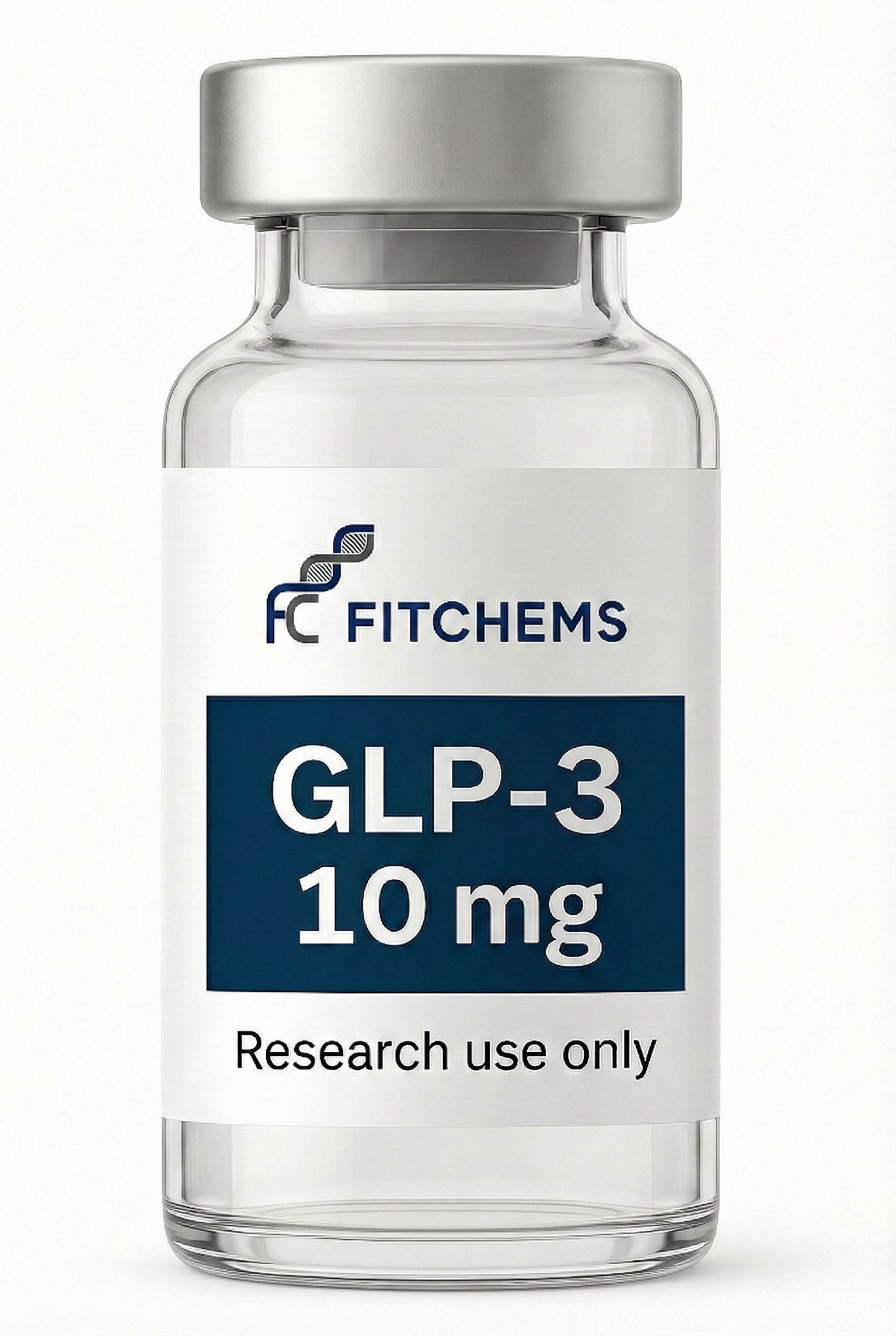
GLP-3
GLP-3, also known as Retatrutide, is an experimental injectable therapy designed to support weight loss and metabolic health by activating three key hormone pathways involved in appetite, insulin response, and energy expenditure. Clinical studies show substantial weight reduction (around 22–28% over 48 weeks) along with improvements in glucose regulation, liver fat, and other metabolic markers.
$ 120.00 USD
Research Overview
What is GLP-3?
- Retatrutide (also known by its research code LY-3437943) is an experimental injectable drug developed by Eli Lilly and Company for the treatment of obesity (and related metabolic disorders).
- It is not yet approved by the U.S. Food & Drug Administration (FDA) for general use.
- Its mechanism of action is unique: it is a triple-agonist — meaning it simultaneously activates three hormone receptors:
- GLP-1 (glucagon-like peptide-1) receptor
- GIP (glucose-dependent insulinotropic polypeptide) receptor
- Glucagon receptor (GCGR)
- Because of the triple-receptor action, it’s sometimes referred to in media as a “triple G” (G for GLP-1, GIP, Glucagon) or the next generation beyond dual-agonists.
How Does It Work?
- GLP-1 receptor activation: results in slowed gastric emptying, increased satiety (feeling full), reduced food intake, and improved insulin secretion.
- GIP receptor activation: GIP is an incretin hormone (released after eating) that can enhance insulin secretion. By activating this receptor, retatrutide may improve metabolic responses to meals.
- Glucagon receptor activation: somewhat paradoxically, glucagon is typically thought of as a hormone that raises blood glucose, but in the context of a triple-agonist the idea is that glucagon receptor activation may increase energy expenditure and fat breakdown (lipolysis) in certain tissues.
- Because of these combined mechanisms, retatrutide shows not only effects on weight loss (via appetite, intake, and possibly energy expenditure) but also on glucose metabolism, liver fat, lipids, and other metabolic parameters.
What Do the Clinical Trials Show?
The clinical evidence so far (mostly Phase 2) looks promising. Some highlights:
- In a key Phase 2 trial published in the New England Journal of Medicine, adults with obesity (without diabetes) treated with retatrutide for up to 48 weeks saw mean weight reductions of ~24% in the highest-dose group (12 mg) at 48 weeks.
- For example: at 24 weeks, reductions of ~17.5% in body weight; at 48 weeks, ~22.8% to ~24.2% depending on dose.
- Beyond weight: improvements in metabolic measures were observed — e.g., reductions in waist circumference, improvements in blood pressure, reductions in fasting glucose/HbA1c in some studies.
- Specific to liver fat: In a substudy of people with metabolic dysfunction-associated steatotic liver disease (MASLD), retatrutide reduced liver fat by up to ~80% in some dose groups at 24 weeks.
What Are the Benefits?
Here are some of the potential advantages of retatrutide based on current data:
- Significant weight loss: The magnitude of weight loss in trials (20 %+ of body weight) is substantially higher than many existing therapies.
- Metabolic improvements: Because of its effects on multiple hormone systems, it could improve not only weight but glucose control, liver fat, lipids, etc.
- Weekly dosing: The pharmacologic design allows for weekly administration (which is more convenient than daily injections).
- Novel mechanism: By activating three receptors rather than one or two, it may overcome some of the limitations of current therapies (in terms of plateauing, diminished effect, or limited metabolic benefit).

Accepting
